01
Die Design & Fabrication
In-house die engineering for optimized metal flow, dimensional stability, and repeatable profile geometry.
Our in-house engineering team continuously improves die performance, alloy behavior, and process capability to deliver international-grade aluminum solutions.
Four pillars of in-house technical control — from die geometry to surface finish.
In-house die engineering for optimized metal flow, dimensional stability, and repeatable profile geometry.
Controlled alloy preparation and melt management for extrusion billets, ingots, and wire rod production.
Spectrometry, dimensional checks, and mechanical testing for traceable quality assurance at each stage.
Anodizing and powder-coat process controls tuned for corrosion resistance and premium finish consistency.
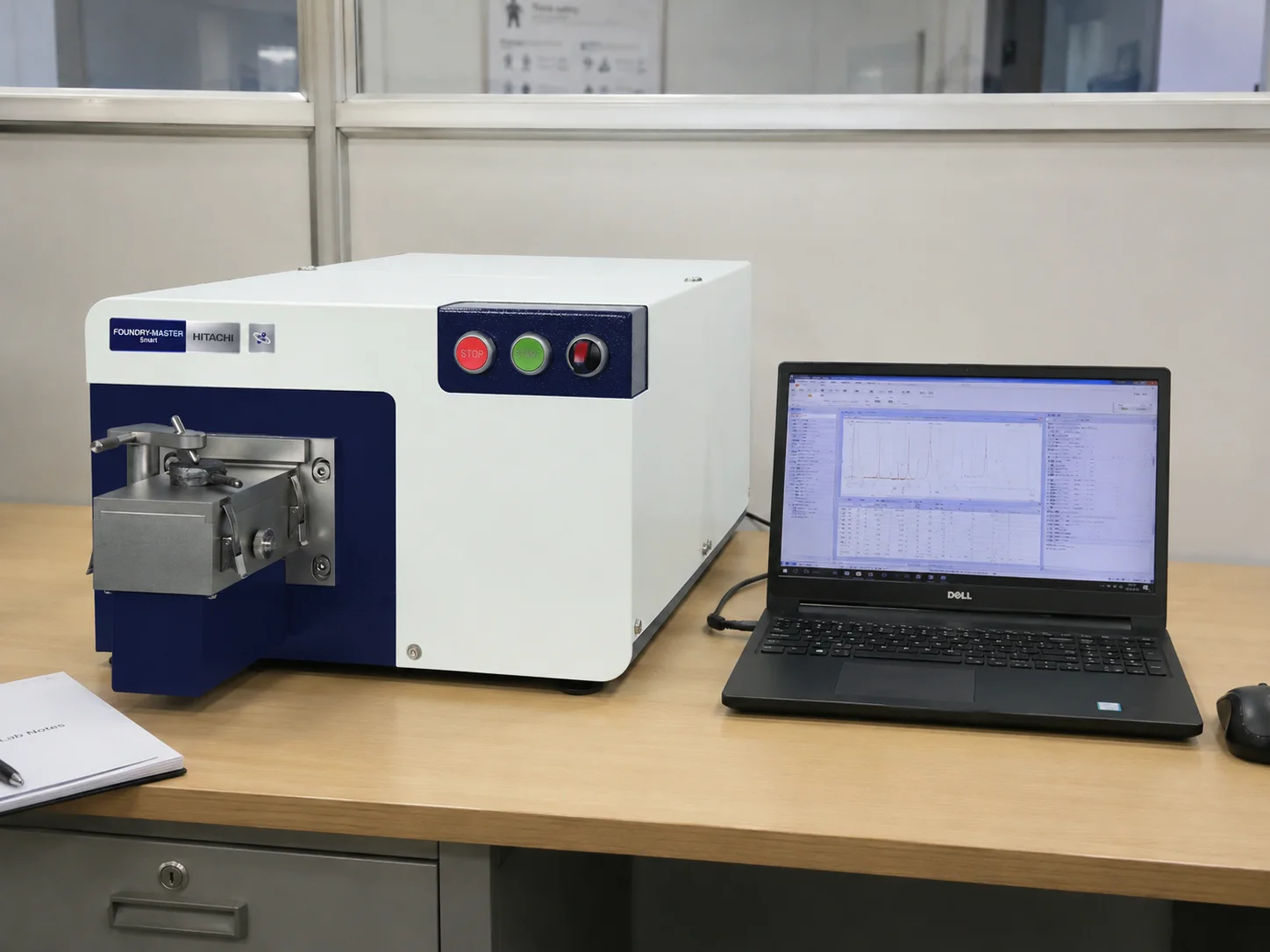
QA Lab
Traceable verification
Production feedback loops, metallurgical analysis, and application-level testing continuously refine profile performance and manufacturability across sectors.
“Our in-house R&D team continuously improves product quality to meet evolving industry and international standards.”
A closed engineering loop from billet selection through lab release.
01
Material composition is selected to match functional and performance needs.
02
Profile-specific dies are engineered, tested, and validated for target tolerances.
03
Metal flow, speed, and thermal cycles are tuned for dimensional and mechanical accuracy.
04
QA checks verify chemistry, dimensions, and metallurgical performance before dispatch.
Wrought grades
Expand any grade for IS chemical limits and mechanical minima by temper (M/F, W/T4, WP/T6) for bars, rods, and sections.
Indian wrought designations
Ingot grades aligned to BS, JIS, ASTM and GB specifications for casting programmes.
LM-6 / AC4A
BS 1490 · JIS H 2211
Pressure-tight castings, marine fittings, food / dairy
LM-4 / AC2A
BS 1490 · JIS H 2211
General sand & gravity die castings — engine parts
LM-24 / AC4B
BS 1490 · JIS H 2211
Pressure die-cast components — automotive housings
ADC-12
JIS H 2118
Automotive pressure die-cast — high fluidity, low shrinkage
A380 / A413.1
ASTM B85-96
Engine blocks, gearbox housings, electrical enclosures
YL10 / YL104
GB/T 15115-1994
Chinese standard die-cast — automotive & electronics
Metallurgical cross-reference
Cross-reference wrought designations across IS, BS, AA, ALCAN, DIN, JIS, ASM, AFNOR and GOST — matching the Jhalani alloy specification brochure and Indian wrought grade families.
| IS (India) | BS (UK) | AA (USA) | ALCAN (Canada) | DIN (Germany) | ASM | JIS (Japan) | AFNOR (France) | GOST (Russia) |
|---|---|---|---|---|---|---|---|---|
| 19500 | 1S | 1050 / 1060 | 1S | 1S | Al 99.5 | Al 1 | A 5 | — |
| 19000 | 2S | 1100 | 2S | 2S | Al 99.0 | Al 3 | A 5 | A 2 |
| 63400 | 50S / HE9 | 6063 | 50S | 50S | Al MgSi 0.5 | A2 S5 | ASG | — |
| 65032 | 65S / HE20 | 6061 | 65S | 65S | AlMgSi | A2 S4 | — | — |
| 64430 | B51S / HE30 | 6082 / 6351 | B51S | B51S | AlMgSi1 | — | 6081 (NP) | — |
| 62400 | C51S | 6005 | C51S | C51S | — | — | — | — |
Source · Company alloy equivalents table · Indian designations
IS 5052 · Temper key
Indian (IS) and AA temper codes used with mechanical property tables — strength, ductility, and service condition.
IS · AA
O / O
Annealed — lowest strength, maximum ductility
IS · AA
M / F
As fabricated / as manufactured (typical properties only)
IS · AA
W / T4
Solution heat-treated and naturally aged
IS · AA
P / T5
Cooled from hot working and artificially aged
IS · AA
WP / T6
Solution heat-treated and artificially aged
Our manufacturing quality is backed by the certifications we hold — BIS Certified and ISO 9001:2015.
BIS Certified
ISO 9001:2015
Need alloy guidance, die feasibility, or a project-specific datasheet? Our engineering team supports selection from concept through release.